Historicity, Alterity and Diversity
The Challenges of Teaching Indigenous History and Culture in Schools
DOI:
https://doi.org/10.30612/rehr.v16i31.14846Keywords:
Indigenous Peoples, Stereotypes, Sociodiversities, University and SchoolAbstract
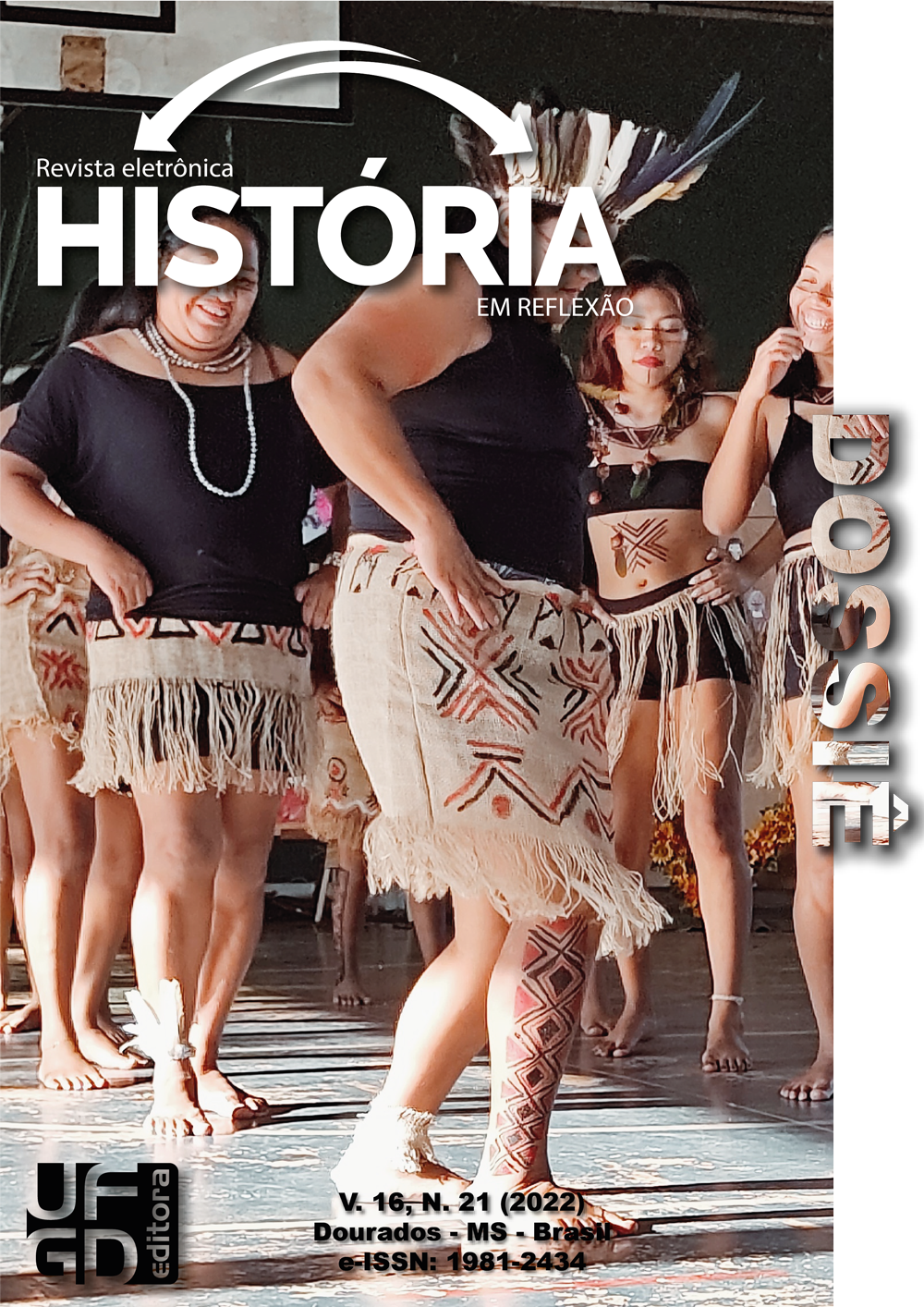
This paper reflects on some of the impacts, issues, changes and continuities in the teaching and learning of the history and indigenous culture in the school context of basic education which arise from the execution of the Law 11.645/2008. The analyses focused on the knowledge of high school students from three state schools in the city of Dourados (Mato Grosso do Sul - MS), who participated in the edition of PIBID História (2018-2019), from the Federal University of Grande Dourados (UFGD). This data was gathered and systematized through the application of questionnaires, which made up the initial phase of activities at the schools, called 'surveying’. Stereotypes about indigenous peoples such as essentialist notions of culture, which deny ethnic alterities and sociodiversities, are still major challenges to be overcome. The solidification of the dialogue between academic production and school production, that is, an approximation and articulation between university and school, presents itself as a favorable path for the historical debate, which must be converted into a tool that allows the overcoming of myths and stereotypes, especially those referring to indigenous peoples in Brazil. Thus it is about overcoming culturalist visions, based on a predominantly Eurocentric and conservative perspective (whose notions are responsible for manufacturing intolerances and violence) and understanding historicities and recognizing and respecting diversities.
Downloads
References
ALBUQUERQUE JR, Durval Muniz de. Fazer defeitos nas memórias: para que servem o ensino e a escrita da história? In: GONÇALVES, Márcia de Almeida. Et. Al. Qual o valor da história hoje? Rio de Janeiro: Editora FGV, 2012. p. 21-39.
ANDRADE, Juliana Alves; SILVA, Tarcísio Augusto Alves da. O ensino da temática indígena: subsídios didáticos para o estudo das sociodiversidades indígenas. Recife: Edições Rascunhos, 2017.
BITTENCOURT, Circe Fernandes. Reflexões sobre o ensino de História. In: Estudos Avançados, 32 (93), 2018. p. 127-149.
BITTENCOURT Circe M. F. As “tradições nacionais” e o ritual das festas cívicas. In: PINSKY, Jaime (Org.). O ensino de história e a criação do fato. 9ª Ed. São Paulo: Contexto, 2001. p. 43-72.
CABRINI, C. (org.). O ensino de história: revisão urgente. São Paulo, Brasiliense, 1986.
COLLET, Célia; PALADINO, Mariana; RUSSO, Kelly. Quebrando preconceitos: subsídios para o ensino das culturas e história dos povos indígenas. Rio de Janeiro: Contra Capa Livraria; Laced, 2014.
CUNHA, Manuela Carneiro da. (Org.). História dos índios no Brasil. São Paulo: Cia. das Letras, 1992.
DAVIES, Nicholas. As camadas populares nos livros de História do Brasil In: PINSKY, Jaime (Org.). O ensino de história e a criação do fato. 9ª Ed. São Paulo, Contexto, 2001. p. 93-104.
FONSECA, Selva Guimarães. Didática e prática de ensino de história: experiências, reflexões e aprendizados. 7ª ed. São Paulo, Papirus, 2003.
FUNARI, Pedro Paulo; PIÑON, Ana. A temática indígena na escola: subsídios para os professores. São Paulo: Editora Contexto, 2011.
JANOTTI, M. L. M. História, política e ensino. In: BITTENCOURT, Circe (org.). O saber histórico na sala de aula. 10ª ed. São Paulo, Contexto, 2005. p. 41-53.
MATHIAS, Carlos Leonardo Kelmer. O ensino de História no Brasil: contextualização e abordagem historiográfica. In: História Unisinos. Vol. 15 (1), 2011. p. 40-49.
MONTEIRO, John Manuel. O desafio da história indígena no Brasil. In: SILVA, Aracy Lopes; GRUPIONI, Luís Donizete Benzi (Orgs.). A temática indígena na escola: novos subsídios para professores de 1º e 2º graus. Brasília, MEC/MARI/UNESCO, 1995. p. 221-236.
MONTEIRO, John Manuel. Os negros da terra: índios e bandeirantes nas origens de São Paulo. São Paulo: Companhia das Letras, 1994.
NADAI, Elza. O ensino de história e a “pedagogia do cidadão”. In: PINSKY, Jaime (Org.). O ensino de história e a criação do fato. 9ª Ed. São Paulo, Contexto, 2001. p. 23-30.
NOVAK, Éder da Silva; MENDES, Luís César Castrillon. Aproximando universidade e escola: ensino de histórias e culturas indígenas. Jundiaí: Paco Editorial. 2021.
OLIVEIRA, João Pacheco de. O nascimento do Brasil e outros ensaios: “pacificação”, regime tutelar e formação de alteridades. Rio de Janeiro: Contra Capa, 2016.
PEREIRA, Júnia Sales. Do colorido à cor: o complexo identitário na prática educativa. In.: GONÇALVES, Márcia de Almeida. Et. Al. Qual o valor da história hoje? Rio de Janeiro: Editora FGV, 2012. p. 306-321.
PINSKY, Jaime. Nação e ensino de história no Brasil. In: PINSKY, Jaime (org.). O ensino de história e a criação do fato. 9ª ed. São Paulo, Contexto, 2001. p. 12-22.
PINSKY, Jaime (Org.). O ensino de história e a criação do fato. São Paulo, Contexto, 1988.
SILVA, Ana Cláudia Oliveira da. A implantação da Lei 11.645/2008 no Brasil: um histórico de mobilizações e conquistas. In.: SILVA, Edson; SILVA, Maria da Penha da. (Orgs.) A temática indígena em sala de aula: reflexões para o ensino a partir da Lei 11.645/2008. Recife: Ed. Universitária da UFPE, 2013. p. 101-136.
SILVA, Aracy Lopes; GRUPIONI, Luís Donizete Benzi (Orgs.). A temática indígena na escola: novos subsídios para professores de 1º e 2º graus. Brasília, MEC/MARI/UNESCO, 1995. p. 221-236.
SILVA, Edson; SILVA, Maria da Penha da. (Orgs.). A temática indígena em sala de aula: reflexões para o ensino a partir da Lei 11.645/2008. Recife: Ed. Universitária da UFPE, 2013.
SILVA, Edson; ANDRADE, Juliana Alves de; SILVA, Tarcísio Augusto Alves da. Formação docente e o ensino da temática indígena. Maceió: Editora Olyver. 2021.
SILVA, Marcos Antônio; FONSECA, Selva Guimarães. Ensino de história hoje: errâncias, conquistas e perdas. In: Revista Brasileira de História. São Paulo, v. 31, nº 60, 2010. p. 13-33.
WITTMANN, Luisa Tombini. (Org.) Ensino (d)e história indígena. Belo Horizonte: Autêntica Editora, 2015.
Downloads
Published
How to Cite
Issue
Section
License
Copyright (c) 2022 Éder da Silva Novak, Ivana Aparecida da Cunha Marques, Angelita Verônica dos Santos

This work is licensed under a Creative Commons Attribution-NonCommercial-ShareAlike 4.0 International License.
Authors who publish in this journal accept the publication guidelines and agree to the following terms:
(a) The Editorial Board reserves the right to make changes to the originals in Portuguese to maintain the formal standard of the language, while respecting the authors' style.
(b) Authors retain copyright and grant the journal the right to first publication, with the work simultaneously licensed under the Creative Commons Atribuição-NãoComercial-CompartilhaIgual 4.0 Internacional, which allows: Share — to copy and redistribute the material in any medium or format, and Adapt — to remix, transform, and create from the material. The Creative Commons Atribuição-NãoComercial-CompartilhaIgual 4.0 Internacional includes the following terms:
- Attribution — You must give appropriate credit, provide a link to the license, and indicate if changes were made. You must do this in a reasonable manner, but not in any way that suggests the licensor endorses you or your use.
- NonCommercial — You may not use the material for commercial purposes. ShareAlike — If you remix, transform, or create from the material, you must distribute your contributions under the same license as the original.
- No additional restrictions — You may not apply legal terms or technological measures that legally restrict others from doing anything the license permits.
(c) Authors are permitted and encouraged to publish and distribute their work online—in institutional repositories, personal pages, social networks, or other scientific dissemination sites, provided that the publication is not for commercial purposes.