Wet nurses in the Correio Paulistano (1870-1879): the slave trade
DOI:
https://doi.org/10.30612/rehr.v14i28.11969Keywords:
Wet nurse. Mother women. Correio Paulistano. Medical theses.Abstract
The article aims to discuss the maternal relations of enslaved wet nurses, women-mothers who were exploited in the commercialization of their milk during their lactation period, through sources such as: the advertisements of the newspaper Correio Paulistano (1870-1879) and theses 19th century medical doctors, by the authors Moura (1873) and Silva (1884). In this sense, it is proposed to look at the relations of gender, race and class, from the perspective of the social history of slavery with an emphasis on enslaved black women.Downloads
References
BADINTER, Elisabeth. Um Amor Conquistado. O Mito do Amor Materno. 9. ed. Rio de Janeiro: Nova Fronteira, 1985.
Correio Paulistano – 1870, ed. 04135
Correio Paulistano – 1870, ed. 04324
Correio Paulistano – 1873, ed. 04948
Correio Paulistano – 1874, ed. 05412
Correio Paulistano – 1876, ed. 05931
Correio Paulistano – 1877, ed. 06176
Correio Paulistano – 1877, ed. 06212
Correio Paulistano – 1877, ed. 06233
COWLING, Camillia; MACHADO, Maria Helena P.T; PATON, Diana e WEST, Emily (orgs.). Mothering Slaves: comparative perspectives on motherhood, childlessness, and the care of children in Atlantic slave societies. Slavery and Abolition, Special Edition, vol.38, n.2, junho, 2017.
DAVIS, Angela, Mulheres, raça e classe. 1. ed. - São Paulo: Boitempo.
DEL PRIORE, Mary. Ao sul do corpo: condição feminina, maternidade e mentalidades no Brasil Colônia. São Paulo: Editora UNESP, 2009.
FREITAS, Bárbara Ferreira de. Maternidade e branquitude: uma discussão sobre os privilégios raciais, simbólicos e materiais. Trapiche – educação, cultura & artes. São Cristóvão (SE), n.3, 2019.
HOOKS, Bell. E eu não sou uma mulher? : mulheres negras e feminismo. Rio de Janeiro: Rosa dos Tempos, 1ª ed., 2019.
MARTINS, Bárbara Canedo Ruiz. Amas-de-leite e mercado de trabalho feminino: descortinando práticas e sujeitos (Rio de Janeiro, 1830-1890). Rio de Janeiro: UFRJ, Dissertação de Mestrado em História, 2006.
MOURA, Francisco José Coelho de. Do aleitamento natural, artificial e mixto em geral e particular do mercenario, em relação ás condições em que elle se acha no Rio de Janeiro. Rio de Janeiro: Typographia Carioca, 1874.
RODRIGUES, Ariene Alexsandra. De peito aberto: os discursos sociais sobre a maternidade produzidos pela mídia na cobertura dos mamaços no Brasil. Instituto de Comunicação e Informação Científica e Tecnológica em Saúde da Fundação Oswaldo Cruz, Monografia, Rio de Janeiro, 2017
SCHWARCZ, Lilia M. Retrato em branco e negro: jornais, escravos e cidadãos em São Paulo no final do século XIX. 2ª ed. São Paulo: Companhia das Letras, 2017.
SCOTT, Joan. Gênero: uma categoria útil de análise histórica. Educação e Realidade, jul./dez. 1995.
SILVA, João Baptista Monteiro da. Da alimentação das primeiras idades: estudos crítico sobre diferentes methodos de aleitamento. Faculdade de Medicina do Rio de Janeiro, Rio de Janeiro, Typographia G. Leuzinger & Filhos, 1884.
SOIHET, Rachel. O corpo feminino como lugar de violência. Proj. História. São Paulo, (25), dez, 2002.
TELLES, LORENA FÉRES DA SILVA. Amas de leite. In: SCHWARCZ, Lilia; GOMES, Flávio. (Org.). Dicionário da Escravidão e da Liberdade. 1ed.São Paulo: Companhia das Letras, 2018.
TELLES, Lorena Féres da Silva. Teresa Benguela e Felipa Crioula estavam grávidas: maternidade e escravidão no Rio de Janeiro (século XIX). Tese (doutorado) – Faculdade de Filosofia, Letras e Ciências Humanas da Universidade de São Paulo. Departamento de História. São Paulo, 2018.
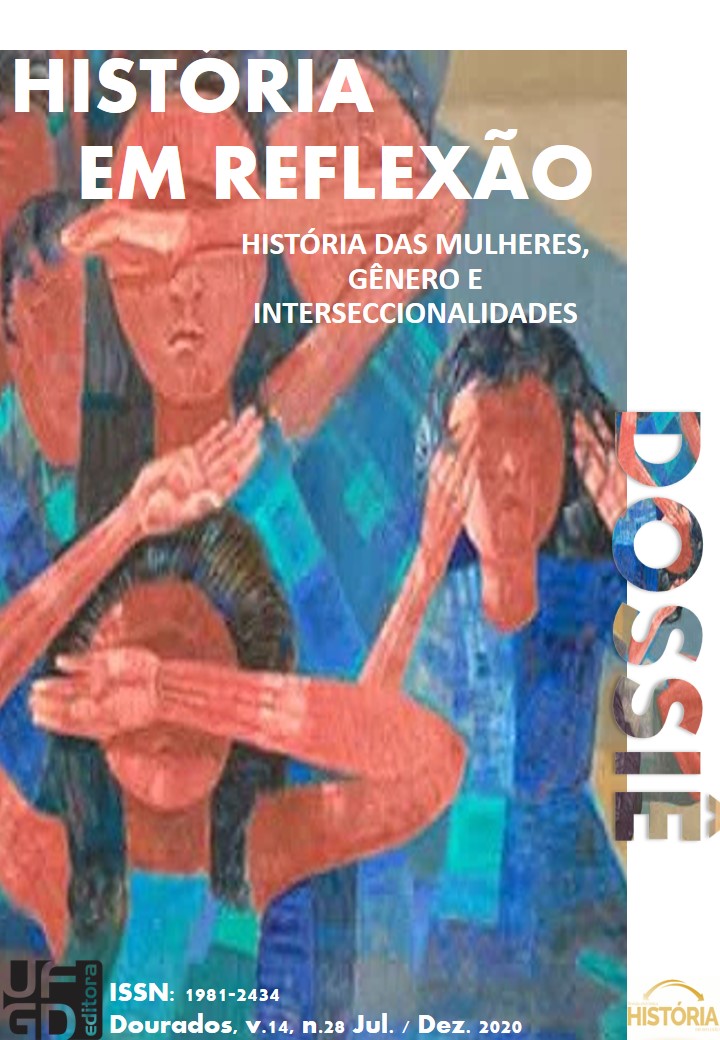
Downloads
Published
How to Cite
Issue
Section
License
Copyright (c) 2020 Revista Eletrônica História em Reflexão (REHR)

This work is licensed under a Creative Commons Attribution-NonCommercial-ShareAlike 4.0 International License.
Authors who publish in this journal accept the publication guidelines and agree to the following terms:
(a) The Editorial Board reserves the right to make changes to the originals in Portuguese to maintain the formal standard of the language, while respecting the authors' style.
(b) Authors retain copyright and grant the journal the right to first publication, with the work simultaneously licensed under the Creative Commons Atribuição-NãoComercial-CompartilhaIgual 4.0 Internacional, which allows: Share — to copy and redistribute the material in any medium or format, and Adapt — to remix, transform, and create from the material. The Creative Commons Atribuição-NãoComercial-CompartilhaIgual 4.0 Internacional includes the following terms:
- Attribution — You must give appropriate credit, provide a link to the license, and indicate if changes were made. You must do this in a reasonable manner, but not in any way that suggests the licensor endorses you or your use.
- NonCommercial — You may not use the material for commercial purposes. ShareAlike — If you remix, transform, or create from the material, you must distribute your contributions under the same license as the original.
- No additional restrictions — You may not apply legal terms or technological measures that legally restrict others from doing anything the license permits.
(c) Authors are permitted and encouraged to publish and distribute their work online—in institutional repositories, personal pages, social networks, or other scientific dissemination sites, provided that the publication is not for commercial purposes.